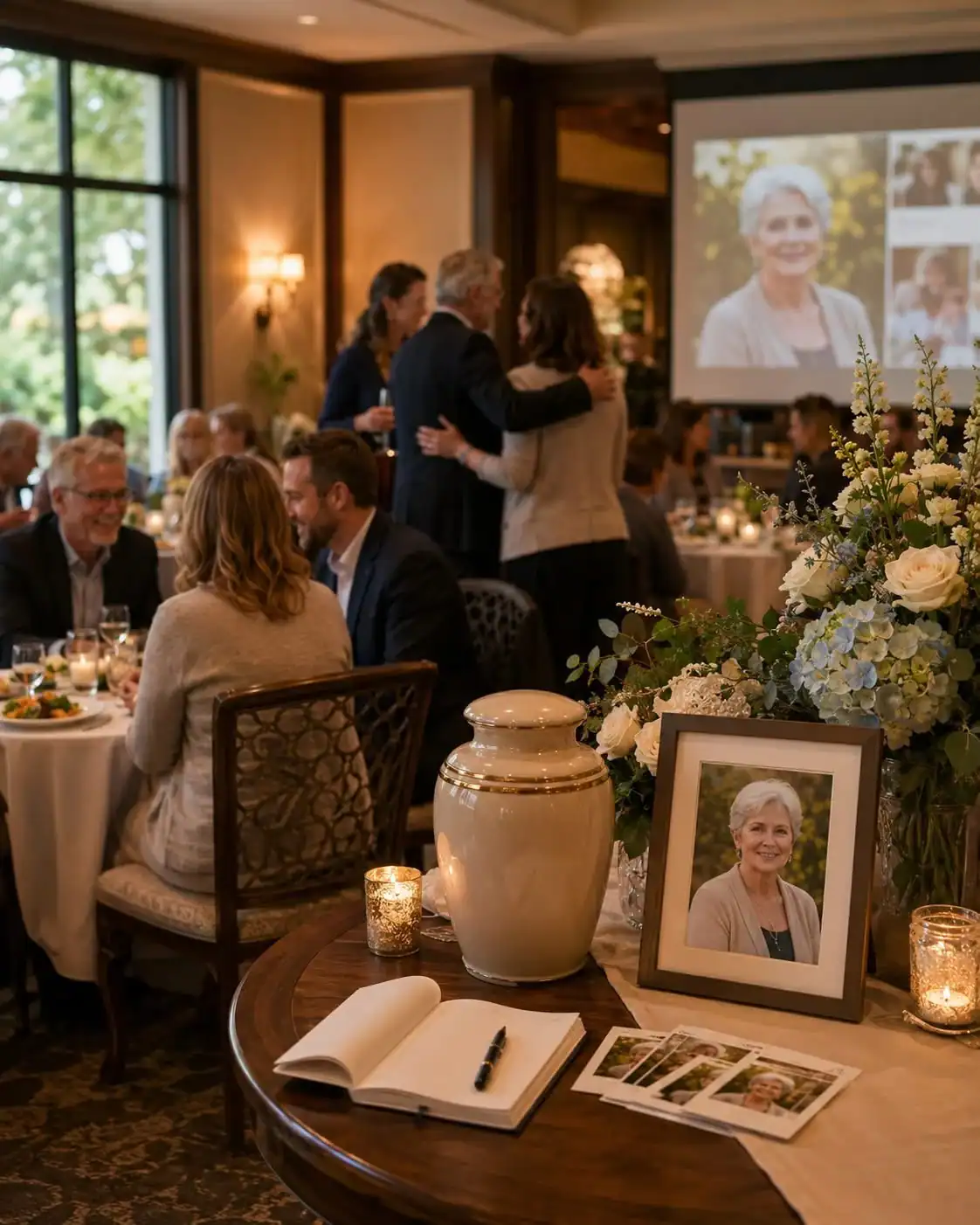


When you separate direct cremation from the memorial service, you gain incredible freedom. You are no longer rushing to organize an event in three days under the strict, costly guidance of a traditional funeral home. You can take a breath, gather your thoughts, and plan a memorial farewell on your own timeline.
However, that freedom can sometimes feel a bit overwhelming. Without a funeral director standing at the front of the chapel with a clipboard, you might wonder: How do we actually run this thing? What happens first? How do we keep the event moving naturally?
One of the common statements families tell us after arranging a direct cremation is this: “Nobody tells you what comes next.”
And, if opting to host a Memorial after the cremation, the questions families ponder are:
How long should the service be?
Who should speak?
Do we need music?
Does it have to follow traditional funeral rules?
The simple answer is no.
The simple answer is that a family-led memorial after a cremation does not have to be perfect. It does not have to follow a rigid plan. It simply needs to feel genuine.
An Order of Service is simply a loose roadmap for your gathering. It ensures everyone knows what to expect, who is speaking, and when to transition between elements of the service. Having an Order of Service helps ensure a family-led service stays organized and on track, even without the ‘discipline’ and objective rigidity of a funeral director. It is similar to that of a Master of Ceremonies [or MC], whose role is to manage the order of events, monitor the timeline, and announce the next stage as events unfold.
Think of having an Order of Service as a gentle guide rather than a strict timetable. It helps everyone know what to expect while leaving plenty of room for laughter, tears, unexpected stories, and those moments that often become the memories people cherish most. It helps guide a remembrance, as a base sequence, but can be adapted to suit the gathered group or the turn of events, as those gathered express their responses.
Below, we have mapped out six distinct, easy-to-use templates for a family-led memorial, ranging from casual backyard potlucks to structured, formal celebrations.
The Master Structure: 3 Key Elements of a Family-Led Service

While every service is unique, most successful family-led memorials follow a simple three-part narrative arc:
- The Gathering (10–15 mins): Welcome people, settle them into the space, and set the tone with music or a brief opening statement.
- The Sharing (30–45 mins): This is the heart of the service—the reading of the life story (obituary), selected poems, music, and eulogies.
- The Sending & Socializing (15+ mins): A clear closing ritual or final thank-you, followed by an open invitation to eat, drink, and share memories informally.
Don’t worry if your service doesn’t follow this exactly. Some families spend forty minutes talking before anyone formally opens the service. Others scatter ashes first and enjoy lunch afterward.
There is no right or wrong way—only what feels right for your family.
6 Sample Order of Service Memorial Guides to Help You Prepare & Plan
1. The Casual Backyard or Living Room Gathering
Best for: Close-knit families wanting a relaxed, low-stress, and deeply intimate environment.
- 00:00 – Welcome & Settling In: Guests arrive; background music plays (a playlist of the loved one’s favorite songs).
- 00:15 – Opening Words: A family member or close friend steps forward, thanks everyone for coming, and shares a brief memory to officially open the afternoon.
- 00:20 – The Life Story: Someone reads the official obituary or a short timeline of their life milestones, achievements, and funny quirks.
- 00:30 – Group Reflection / Candle Lighting: A moment of silence where a central memorial candle is lit next to the urn or a photo gallery.
- 00:35 – Open Floor Storytelling: The host invites anyone who wishes to stand up and share a brief, favorite story or memory (keep it voluntary and low-pressure).
- 00:55 – Closing & Transition to Food: The host thanks everyone again and invites them to the kitchen or patio for a casual potluck lunch or buffet.
Why this works
Backyard memorials often become the most memorable because conversation flows naturally. Children play, neighbours stop by, people wander between photographs, food and stories. The atmosphere feels more like a family reunion than a funeral—and that’s exactly what many people want.
2. The Nature-Focused Beach or Park Farewell
Best for: Avid hikers, gardeners, or anyone who felt most at peace outdoors.
- 00:00 – The Assembly: Guests gather at a designated landmark (such as a pavilion, trail marker, or beach spot).
- 00:10 – Call to Nature (Opening): The leader reads a nature-focused poem or essay (e.g., Mary Oliver or Henry David Thoreau) to center the group.
- 00:15 – Tributes & Reflections: Two or three pre-selected close friends or family members share structured eulogies.
- 00:30 – Acoustic Music or Silent Reflection: A live acoustic guitar song is played, or the group listens to the natural sounds around them (waves, wind) while holding a silent thought.
- 00:35 – The Committal Circle: Guests form a loose circle. If scattering ashes, the family scatters a portion, or guests cast flower petals into the water or onto the earth.
- 00:50 – Final Blessing / Words of Peace: A brief closing statement focusing on returning to nature and legacy.
- 01:00 – Social Hour: The group transitions to an outdoor picnic, a local brewery, or a nearby restaurant.
Why this works
Being in the outdoors can bring a tranquility and connection to the natural order of the cycle of life. Whether scattering or burying cremated remains, or just gathering in nature in remembrance of a life well-lived. Another bonus, is that arranging an outdoor gathering for a memorial celebration can be done on a very limited budget, but still feel special embracing the wonder of scenic beauty.
3. The “Celebration of Life” Party or Toast
Best for: Someone who explicitly stated, “I don’t want a sad funeral—throw a party instead.”

- 00:00 – The Warm-Up: High-energy or upbeat background music plays. Guests grab a beverage and mingle around a visual memory board.
- 00:20 – The Collective Toast: The host clinks a glass to get everyone’s attention, officially welcomes the crowd, and leads the first group toast.
- 00:25 – The “Best of” Tribute: Instead of a traditional, somber eulogy, a designated speaker delivers a humorous, uplifting presentation that highlights the loved one’s funniest moments, favorite jokes, or grand adventures.
- 00:40 – Video or Photo Slideshow: A 5- to 10-minute digital slideshow set to their favorite upbeat music is projected onto a screen.
- 00:50 – Open Mic “Roast & Toast”: A microphone is passed around for quick, lighthearted stories from the crowd.
- 01:15 – The Final Send-off Song: Everyone raises a final glass as their absolute favorite song is played loudly.
- 01:20 – Continued Celebration: Food is served, and casual celebrating continues into the evening.
This article on How to Plan a Celebration of Life, with ideas, venues, and checklists, may be helpful if you are leaning toward a more celebratory order of service.
Why this works
Celebration memorial events are specifically held with an intent to celebrate a person’s life and accomplishments, or a ‘upbeat’ party theme was requested in the deceased’s wishes. It works for gatherings where remembrance is steered towards selecting bright or a themed color to wear, singing special songs, or having a final toast or balloon release.
4. The Structured, Semi-Traditional Service
Best for: Families renting a community hall, club room, or historic venue who prefer a classic, dignified flow without the heavy religious overlay of a church.
- 00:00 – Processional / Introductory Music: Guests take their seats as a soft instrumental piece plays.
- 00:05 – Words of Welcome: A formal master of ceremonies (a family member or hired secular celebrant) welcomes the guests and outlines the day.
- 00:10 – Formal Eulogy: A comprehensive overview of the deceased’s life, career, family impact, and values, delivered by an immediate family member.
- 00:25 – Special Reading or Poem: A grandchild or close friend reads a chosen piece of literature or poetry.
- 00:30 – Musical Interlude: A dedicated time for quiet reflection while a poignant song plays (with lyrics on a printed program, if available).
- 00:35 – Second Eulogy or Friend’s Perspective: A lifelong friend or coworker shares a perspective on their impact outside the home.
- 00:45 – Closing Remarks & Acknowledgments: The host thanks attendees, mentions where donations can be made in lieu of flowers, and provides instructions for the reception.
- 00:50 – Recessional Music: Guests exit the seating area to an uplifting closing song.
Why this works
A semi-traditional structure gives guests the reassurance of a familiar, dignified flow—welcome, eulogy, reading, reflection and farewell—without tying the service to any one faith. It suits mixed-belief or multi-generational families, where older relatives may expect a recognisable order of service while others simply want something calm and respectful. A printed program and a clear master of ceremonies keep everyone oriented, so the day feels organized and unhurried even in a rented hall or club room.
5. The Micro-Memorial (Under 30 Minutes)
Best for: Very small groups, private ash scatterings, or families who find long events emotionally exhausting.
- 00:00 – Gathering at the Memorial Focal Point: Group settles around a small table featuring the urn, a framed photograph, and a bouquet of flowers.
- 00:05 – Opening Poem: A single, brief reading to mark the official transition into the memorial space.
- 00:10 – The Main Tribute: One family member speaks on behalf of everyone, summarizing what the loved one meant to the family and what lessons they leave behind.
- 00:20 – The Circle of Sharing: Moving around the small circle, each person shares just one word or sentence describing the deceased (e.g., “Kind,” “Resilient,” “Generous”).
- 00:25 – Closing Words & Unity Ritual: A final thank you, followed by a small action like taking a flower from the central vase to keep.
- 00:30 – Adjournment: The group transitions directly into an intimate family dinner.
Why this works
When a gathering is small, brevity is a kindness. A short, contained service carries less emotional weight for those who find long ceremonies draining, yet the focal point—an urn, a photograph, a few flowers—still creates a clear moment of remembrance. The single-word circle gives every person a voice without the pressure of preparing a speech, making it ideal for private ash scatterings or an intimate family goodbye that flows straight into a shared meal.
6. The Activity-Based or Workshop Farewell
Best for: Hobbyists, artists, crafters, or creators whose lives were defined by doing what they loved.

- 00:00 – Arrival & Setting Up the Craft/Hobby: Guests arrive at a workshop, studio, kitchen, or bowling alley. They are handed a small token or tool related to the hobby (e.g., a paintbrush, a seed packet, a recipe card).
- 00:15 – Introduction to the Passion: The host explains why this venue and activity were chosen. “Dad loved woodworking, so today we are going to finish this final project together,” or “Mom loved baking, so we are all baking her signature cookies.”
- 00:25 – The Legacy Story: While hands are busy or things are being prepped, someone reads a eulogy that focuses on how the loved one taught others their craft or shared their passion.
- 00:40 – Shared Activity & Storytelling: Guests work on the activity together, which naturally breaks the ice and prompts storytelling across tables.
- 01:30 – The Showcase / Dedication: Everyone presents what they made, takes a group photo, and dedicates the day’s effort to their loved one’s memory.
- 01:45 – Wrap-Up & Departure: Casual refreshments are served as the event winds down.
Why this works
Shared activity takes the pressure off people who never quite know what to say at a memorial. With hands busy on a craft, a recipe or a game, guests relax and stories surface naturally—often the warmest ones. Building the day around what the person genuinely loved turns the farewell into a living tribute to their identity, and everyone leaves with a keepsake or a finished project that carries a piece of their memory forward.
3 Practical Tips for Whoever Is Leading the Service
If you are the one stepping up to anchor a family-led service, keep these human truths and practical tips in mind:
- Give Yourself Permission to Falter: You are a grieving family member, not a professional broadcaster. If you cry, lose your place, or need to stop and take a sip of water, that’s completely okay. The crowd is entirely on your side.
- Appoint a “Timekeeper”: When doing open-mic storytelling, people can occasionally ramble or veer off-topic. Appoint a gentle friend to sit near the front and give speakers a polite nod or signal when it’s time to wind down.
- Put It on Paper: Even if you think you’ll remember the order, write it down on an index card or a sheet of paper. Grief does funny things to short-term memory, and having a physical roadmap in your hand provides massive peace of mind.
Remember – There Is No “Perfect” Memorial Service
Families sometimes worry they’ll forget something important or won’t get everything exactly right. The truth is, people rarely remember whether the music started at precisely the right moment or whether the readings followed a perfect order.
What they remember is how they felt.
❤️🩹 They remember the laughter after a funny story.
💐 They remember grandchildren placing flowers beside an urn.
🎶 They remember hearing someone’s favorite song one last time.
Those moments matter far more than following any traditional script.
Remembrance that is Meaningful
Planning a memorial service after direct cremation may feel unfamiliar at first, but many families later tell us it became one of the most meaningful decisions they made.
Without the pressure of a traditional funeral timetable, you have the freedom to gather when everyone can attend, choose a place that holds special meaning, and create a tribute that genuinely reflects the life being celebrated.
Whether your memorial lasts twenty minutes in a quiet garden or several hours filled with music, stories, and shared meals, there is no single “correct” format.
The best memorials aren’t remembered for following a perfect schedule.
They’re remembered because they reflected the personality, values, and love that surrounded the person being honored.
If your gathered guests leave smiling through their tears, sharing stories and feeling closer to one another emotionally as they remember the deceased, you’ve already created exactly the kind of farewell most people hope for.
A More Meaningful Farewell — For a Fraction of the Cost
At DFS Memorials, we believe saying goodbye should never mean overspending. For more than twenty years, we’ve championed transparent pricing and every family’s right to make calm, informed choices — free from pressure, upselling, and hidden fees.
That’s why we help families arrange a simple, dignified direct cremation for between $795 and $1,495 in most areas — and then advocate keeping the memorial where it belongs: in your hands. A family-led farewell, held in your own time and your own way, costs a fraction of what a formal funeral-home service would, and it’s very often the more personal and fitting tribute. The templates above are here to help you create exactly that.
Frequently Asked Questions
There’s no correct length. Most family-led memorials run somewhere between 30 minutes and an hour, but yours can be as brief or as unhurried as feels right. A short gathering with a few heartfelt words can be every bit as moving as a longer, structured one. Let the moment breathe rather than watching the clock.
Anyone who wants to. There’s no requirement for a minister, celebrant, or professional officiant unless you’d like one. Family members, close friends, and even children often share the most honest and memorable words. If someone feels nervous about speaking, invite them to read a poem, a favorite passage, or simply offer a single memory — taking part matters far more than polish.
Only if you want it. Music can set the tone and give people permission to feel, but a shared reading, a moment of silence, or the sounds of a meaningful place can be just as powerful. Choose pieces that genuinely meant something to your loved one rather than what tradition expects — the songs they actually loved will always resonate more deeply.
No. A family-led memorial after a cremation isn’t bound by the order of service, dress code, or formalities of a conventional funeral. You can gather in a home, a garden, a restaurant, or a favorite outdoor spot, at whatever time suits everyone. The only “rules” are the ones that help your family feel connected and comforted.
Almost anywhere that held meaning. Living rooms, back gardens, beaches, parks, community halls, and family restaurants are all common choices. Because a direct cremation separates the farewell from the funeral home, you’re free to choose a setting that reflects your loved one’s personality rather than a formal chapel.
None at all. One of the quiet gifts of arranging a direct cremation first is time — time to plan without pressure, to wait for distant relatives to travel, or to hold the memorial on a date that carries meaning, such as a birthday or anniversary. There’s no deadline. The farewell happens when your family is ready.
Sara Marsden-Ille is the co-founder and editor of DFS Memorials as well as US Funerals Online. She has been writing about funeral planning, consumer rights, and cremation costs since 2003, when US Funerals Online launched — one of the first independent funeral consumer resources in the United States. Sara is responsible for editorial standards across the DFS Memorials network and helps to host the Cremation Nation podcast.