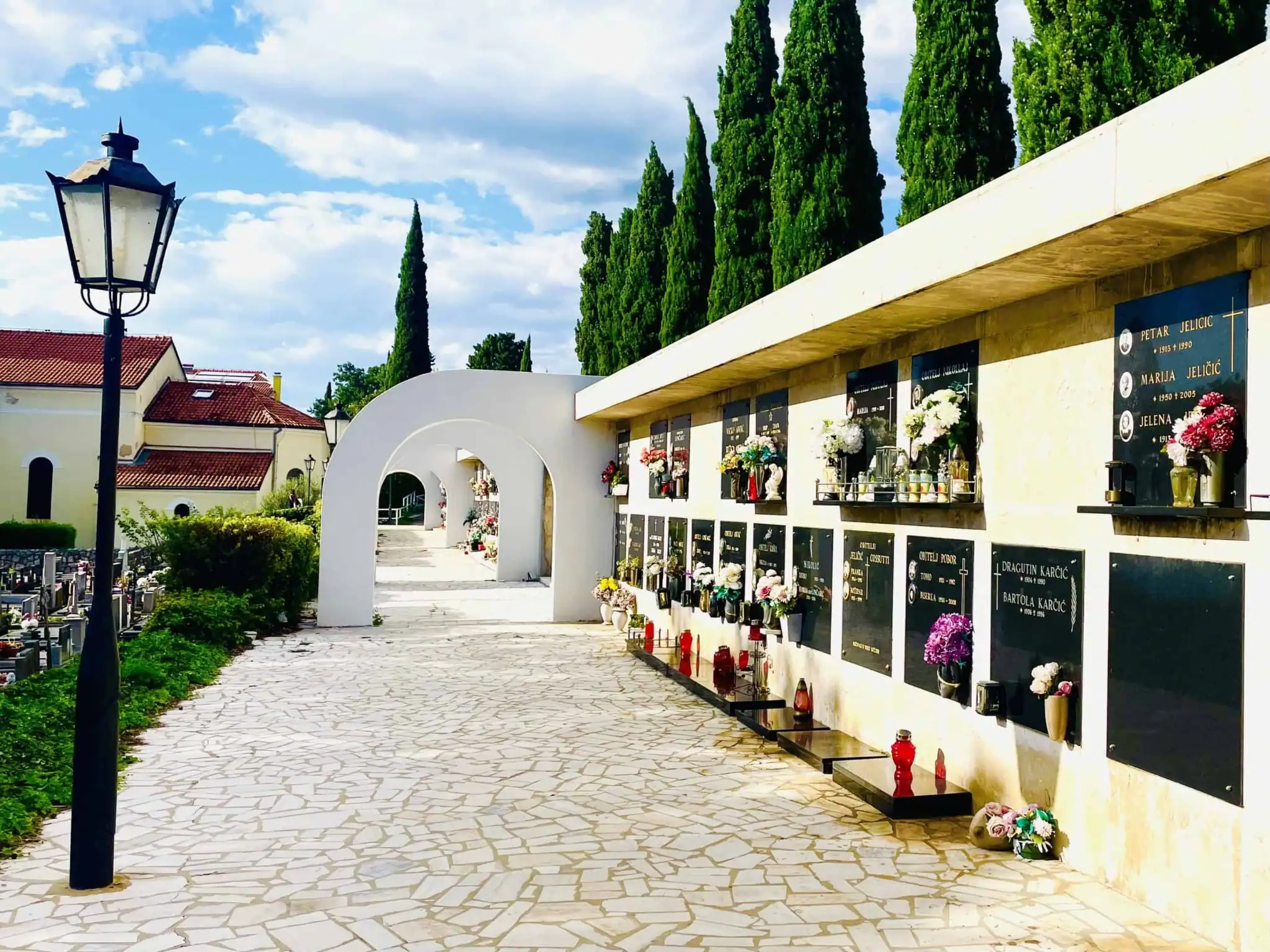

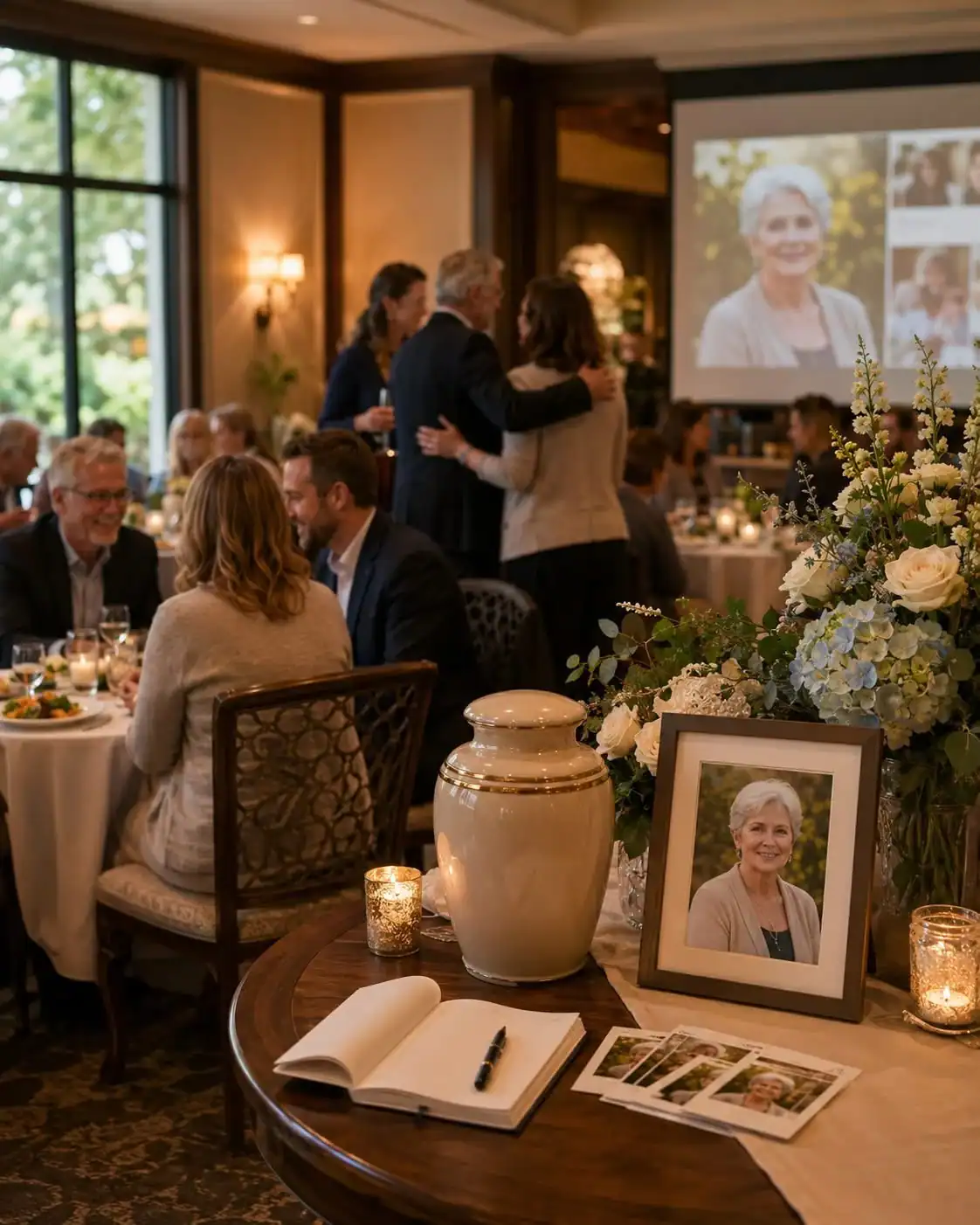
More families are choosing to lead their own memorial services, especially as the move toward direct cremation continues to grow. When family and friends prepare and deliver the eulogy themselves, the tribute becomes something far more personal than anything a stranger at a podium could offer. For the wider picture, see our guide to planning a family-led farewell after cremation.
The idea of a somber, formal funeral is slowly giving way to something more celebratory, personal, and warm. Today, a Life Celebration is one of the most meaningful ways to say goodbye — a gathering that focuses on honoring who someone was rather than simply mourning that they’re gone. The eulogy sits at the heart of that celebration.
If you’ve been asked to give one — or you’ve quietly volunteered yourself — that responsibility can feel daunting. Choosing the right words, striking the right tone, and capturing a whole personality in a few minutes is a lot to carry, often while you’re grieving yourself. This guide is here to make it feel possible.
A eulogy doesn’t have to be perfect — it has to be personal
Before anything else, take the pressure off. A eulogy is not a performance, and it isn’t an exam. It doesn’t need to be polished, poetic, or flawlessly delivered. It simply needs to be honest. The most moving tributes are rarely the most eloquent — they’re the ones that sound like the speaker and capture the person being remembered. If it comes from the heart, it’s already right.
Where to start: gathering your memories

The hardest part is usually the blank page, so don’t start by writing — start by collecting.
- Talk to family and friends. Ask a few people for their favorite memory or the first word that comes to mind. You’ll gather stories you’d forgotten and details you never knew.
- Look through photos, messages, and keepsakes. These jog specific, vivid memories — the kind that bring a person to life for a room full of listeners.
- Jot everything down as it comes. Keep a note on your phone over a few days. Ideas arrive at odd moments.
- Look for a thread. As your notes pile up, a theme usually emerges — their humor, their generosity, a signature saying, the way they made everyone feel welcome. That thread becomes the spine of your eulogy.
A simple structure to follow
Most people find it far easier to write a eulogy when they have a shape to fill in. This three-part structure works for almost any service:
- The opening — set the scene (about 30 seconds). Introduce yourself and your relationship to the person. A single warm or characteristic line about them signals the tone for everyone: “For those who don’t know me, I’m Dad’s youngest — and yes, the one he blamed for the gray hair.”
- The heart — who they were (2 to 3 minutes). This is the core. Choose two or three qualities or stories rather than trying to cover an entire life. Specific beats general every time — one true story about how they always kept fruit gum in the car for the grandkids says more than a paragraph of “he was kind and generous.” Let the thread you found guide which stories you choose.
- The close — the farewell (about 30 seconds). Bring it gently to rest. This might be a thank you on their behalf, a favorite phrase of theirs, a short line of a poem, or a simple goodbye. Give the room a note to hold onto as you step away.
What to include — and what to leave out

Do:
- Introduce yourself and your connection to the person early on.
- Keep it to a manageable length — usually no more than five minutes.
- Use real stories and anecdotes; they’re what people remember.
- Feel free to weave in a poem, a song lyric, a scripture, or a reference to something they loved.
- Think about how your eulogy fits the whole service. Are you the only speaker, or are several people sharing memories? A quick word with the others avoids repeated stories and helps the service flow.
Don’t:
- Dwell on negatives or revisit painful memories.
- Air family secrets or use the moment to settle old scores — be honest, but be kind.
- Wade into religious or political opinions unless you’re certain they suit the family and the person.
Writing a eulogy for a family-led memorial
When you’ve arranged a direct cremation and you’re holding the memorial yourselves, the eulogy has even more freedom. There’s no officiant’s order of service to fit into and no chapel formality to observe. You might speak in a living room, a garden, or your loved one’s favorite restaurant, at whatever moment feels right.
That freedom is a gift. It means the tone can genuinely match the person — lighter, funnier, more conversational than a traditional funeral would ever allow. It also means several family members can each share a few minutes rather than leaving one person to carry it all. If that’s your plan, ask someone to loosely coordinate the order so the afternoon has a natural rhythm — perhaps oldest memories first, building toward the present.
How long should a eulogy be?
The general guideline is three to five minutes, though it depends on the service and whether one person or several are speaking. If four people are each sharing memories, keeping every eulogy short lets everyone contribute without the gathering running long. If you’re the only speaker, you have a little more room — but even then, shorter and heartfelt almost always lands better than long and exhaustive. When in doubt, read it aloud and time it; pages disappear faster than you’d think when you’re speaking slowly.
Delivering the eulogy: nerves, emotion, and getting through it
Writing the eulogy is often only half the worry — many people fear they’ll be too emotional to deliver it. A few things genuinely help:
- Practice out loud, more than once. Reading it silently isn’t the same. Saying the words several times beforehand makes the emotional moments familiar, so they’re less likely to catch you off guard on the day.
- Print it large and clear. Use a big font, double-spaced, on paper you can hold steadily. Notes are completely acceptable — no one expects you to memorize it.
- It’s okay to pause. It’s okay to cry. If your voice breaks, stop, breathe, take a sip of water, and carry on when you’re ready. The room is entirely with you. Emotion isn’t a failure of composure; it’s love, and everyone understands that.
- Have a backup. Ask someone to sit nearby who’s willing to step in and finish reading if you can’t. Just knowing they’re there tends to steady the nerves enough that you won’t need them.
- Speak slower than feels natural. Nerves speed us up. A calm, unhurried pace gives your words — and your listeners — room to breathe.
Can you write your own eulogy?
Yes — and more people are choosing to. There’s no reason a person can’t prepare their own eulogy, and many like the idea of having a say in how they’re remembered. Some find the exercise surprisingly meaningful in life, too: writing down what you’d want said is a quiet way to reflect on what matters to you and whether you’re living the way you hope to be remembered. If a loved one left words of their own behind, reading them aloud at the service can be one of the most powerful moments of the day.
A short example to adapt
Every eulogy is different, but here’s a simple skeleton you can make your own:
“I’m [name], [relationship]. [One warm, characteristic line about them.]
When I think about [name], the first thing that comes to mind is [a quality or theme]. Like the time [a specific, vivid story that shows it]. That was [name] all over.
[A second story or quality — perhaps something only you knew.]
[Name] would probably tell us not to make a fuss. So I’ll just say this: [a favorite phrase of theirs, a line of a poem, or a simple goodbye]. Thank you, [name], for [what they gave you]. We’ll carry it with us.”
Fill in the brackets with your own memories, and you’re most of the way there.
Frequently asked questions
Not at all. Sincerity matters far more than delivery. A family member reading nervously from a sheet of paper will always mean more than a flawless performance from a stranger. Notes are welcome, pauses are fine, and no one is judging your technique.
That’s completely normal, and there’s no shame in it. Pause, breathe, and take your time — the room will wait. It helps to ask someone beforehand to be ready to step in and finish reading if you need them to. More often than not, simply knowing they’re there is enough.
Absolutely, and at a family-led memorial it’s common. Sharing the tribute among several people takes the pressure off any one speaker and paints a fuller picture of the person. Just coordinate loosely in advance so stories aren’t repeated and each speaker keeps to a few minutes.
Focus on what’s honest and kind rather than forcing a picture that isn’t true. You can acknowledge someone’s complexity gently, celebrate the good, and simply leave the rest unsaid. A eulogy is a farewell, not a full accounting — it’s okay to speak only to the parts worth honoring.
Whatever suits the person. Humor, used warmly, is often exactly right — laughter and tears belong together at a good farewell. Let the tone reflect who they really were rather than what a formal funeral is “supposed” to sound like.
Whenever your family is ready. One of the quiet gifts of a direct cremation is time — there’s no deadline, so you can hold the memorial on a date that carries meaning and prepare your words without pressure.
A more meaningful farewell — for a fraction of the cost
At DFS Memorials, we believe saying goodbye should never mean overspending. For more than twenty years we’ve championed transparent pricing and every family’s right to make calm, informed choices — free from pressure, upselling, and hidden fees.
That’s why we help families arrange a simple, dignified direct cremation for between $795 and $1,495 in most areas — and then advocate keeping the memorial where it belongs: in your hands. A family-led farewell, with a heartfelt eulogy at its center, costs a fraction of what a formal funeral-home service would, and it’s very often the more personal and fitting tribute.
Sara Marsden-Ille is the co-founder and editor of DFS Memorials as well as US Funerals Online. She has been writing about funeral planning, consumer rights, and cremation costs since 2003, when US Funerals Online launched — one of the first independent funeral consumer resources in the United States. Sara is responsible for editorial standards across the DFS Memorials network and helps to host the Cremation Nation podcast.