

One of the most common misconceptions about cremation is that it means there will be no ceremony at all. In reality, cremation gives your family more choice about how and when to honor a loved one — not less. The disposition of remains and the memorial are two entirely separate decisions, and you can combine them in any way that feels right. For the bigger picture, see our complete guide to planning a family-led memorial after direct cremation.
Here is a clear overview of the main cremation ceremony options available to families in the United States.

1. Traditional Funeral Service Before Cremation
You can choose a full traditional funeral service — including visitation, viewing, and a formal service — before the cremation takes place. The deceased is present in a rental casket or cremation container, and family and friends gather to pay their respects in exactly the same way as a burial funeral. The cremation then happens afterward.
This is the most formal option and suits families who want the structure of a traditional funeral while still choosing cremation as the disposition method. It is also common for families with strong religious traditions that call for a formal service.
2. Direct Cremation With a Memorial Service Later
This is the most popular choice for families choosing direct cremation today. The cremation takes place shortly after death with no formal ceremony at the time. Once the ashes are returned to the family — typically within 5 to 10 business days — the family plans a memorial service at a time and place of their choosing.
The advantages are significant: there is no 72-hour deadline pressure, out-of-town family have time to travel, costs are dramatically lower, and the memorial can be truly personal — held anywhere from a backyard to a local park, a pub, or a place the deceased loved. This option pairs naturally with a Celebration of Life.
3. Celebration of Life
A Celebration of Life is an increasingly popular alternative to a traditional funeral. Rather than focusing on loss and mourning, it centers on honoring and celebrating who the person was — their personality, passions, humor, achievements, and the lives they touched.
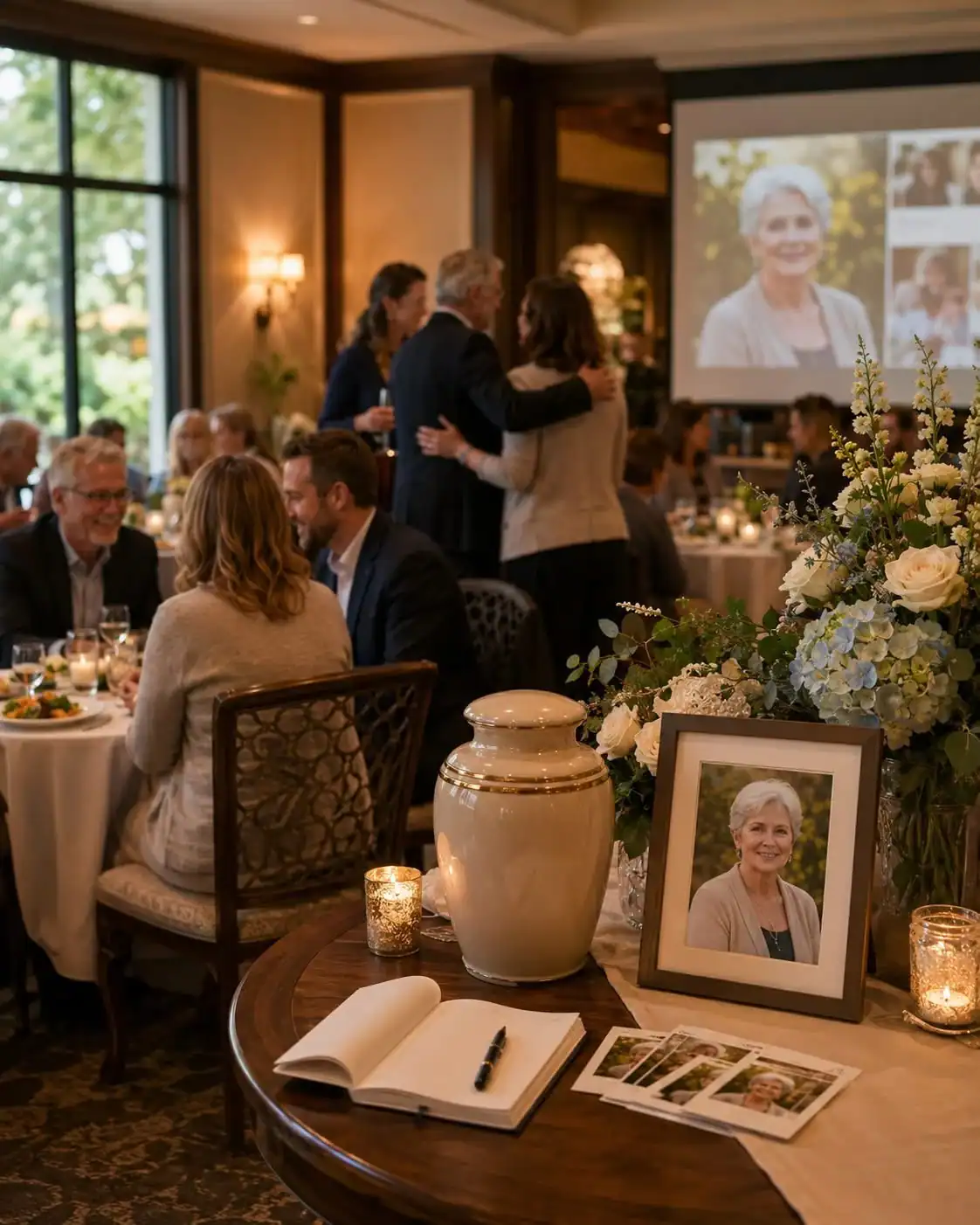
A Celebration of Life can be held anywhere, follow any format, and be as creative as the person it honors. Common elements include personal photo displays, video tributes, the deceased’s favorite music, favorite foods or drinks, and storytelling from friends and family. Some families incorporate the deceased’s hobbies directly into the event. For a full planning guide, see: How to Plan a Celebration of Life After Cremation.
4. Graveside or Scattering Ceremony
If the family chooses to inter the ashes in a columbarium niche or cemetery plot, a graveside committal ceremony can be held — typically brief and intimate, with close family and friends present. A member of the clergy or a celebrant may lead the ceremony, or the family may choose to conduct it themselves.
Alternatively, if the family plans to scatter the ashes, a scattering ceremony can be held at a meaningful location — at sea, in a favorite park, on a mountain, or anywhere that held significance for the deceased. Scattering ceremonies can be private and intimate, or include a broader group. For guidance on legal scattering requirements, see our Complete Guide to Scattering Cremated Remains.
5. Graveside at a National Cemetery (for Veterans)
Eligible veterans and their dependents may have cremated remains interred at a national cemetery free of charge, with full military honors including a flag ceremony and a Presidential Memorial Certificate. This is one of the most meaningful cremation ceremony options available for veteran families and comes at no cost to the family.
6. Virtual Ceremony
When family and friends are spread across different states or countries, a virtual ceremony allows everyone to participate regardless of geography. Live-streamed ceremonies via Zoom, YouTube, or dedicated memorial platforms have become a genuinely meaningful option — and can be combined with a smaller in-person gathering at the same time for those who can attend.
Virtual ceremonies are particularly well-suited to the flexibility that direct cremation provides, since there is no time pressure to arrange the service immediately after the death.
No Ceremony at All
Some families — and many individuals pre-planning their own arrangements — choose a direct cremation with no ceremony of any kind. The ashes may be kept at home, scattered privately, or divided among family members. This is a completely valid choice and is often exactly what the deceased requested. There is no right or wrong answer, and no obligation to hold any formal event.
Choosing the Right Option for Your Family
The right cremation ceremony is whatever feels most meaningful and appropriate to you, the wishes of the deceased, and your family’s circumstances. The beauty of cremation is that it removes the pressure to decide everything within 72 hours. You can take the time to plan something that truly reflects the person you lost.
If you need to arrange a cremation and are unsure what options are available in your area, the providers in the DFS Memorials network are happy to answer your questions with no obligation.
Sara Marsden-Ille is the co-founder and editor of DFS Memorials as well as US Funerals Online. She has been writing about funeral planning, consumer rights, and cremation costs since 2003, when US Funerals Online launched — one of the first independent funeral consumer resources in the United States. Sara is responsible for editorial standards across the DFS Memorials network and helps to host the Cremation Nation podcast.