

A Complete Scattering Ceremony Guide for NYC Families
Legal options, permitted locations, step-by-step guidance, and practical planning tips for scattering cremated remains in New York City.
Introduction: Honoring a Loved One in the City That Never Sleeps
Choosing to scatter the ashes of someone you love is a deeply personal decision. For many New York City families, the city itself — its parks, waterways, and iconic skyline — is an integral part of who their loved one was. Whether they walked the paths of Central Park every morning, sailed on the Hudson, or simply called the five boroughs home, scattering their ashes in a meaningful place can provide a profound sense of closure.
This guide is designed to help NYC families understand their options clearly and confidently. It covers the legal framework, permitted locations, step-by-step planning, and practical tips so you can focus on what matters most: honoring your loved one with dignity and care.
| At a Glance: Key Rules for Scattering Ashes in NYC |
| NYC Parks (including Central Park) permit scattering on land — with important restrictions. |
| Ashes must be finely processed and fully dispersed. No markers, memorials, or flowers may be left behind. |
| Avoid playgrounds, athletic fields, hard surfaces, water bodies within the park, and heavily trafficked areas. |
| Groups of 20 or more require a Special Event Permit from NYC Parks. |
| NY State Parks prohibit scattering entirely. NYC Parks and NY State Parks are different systems. |
| Scattering at sea is federally regulated: must be at least 3 nautical miles from shore, with EPA notification within 30 days. |
| New York State has no overarching law restricting the storage or scattering of ashes on private property. |
| Scattering in NYC’s drinking water reservoirs or protected water supply areas is illegal. |
Understanding the Legal Framework for Scattering Cremated Remains

One of the most common questions families have is simply: “Is it legal to scatter ashes in New York City?” The short answer is yes — but it depends significantly on where and how you do it. Regulations operate at three levels: federal, state, and local.
New York State Law
New York State has no overarching law that controls where cremated remains may be stored or scattered. Cremains are not classified as a health hazard or environmental contaminant. However, this does not mean anything goes — local rules, federal regulations, and property owners’ rights still apply.
Under New York Public Health Law, a funeral director must complete and file the death certificate within 72 hours of death. A cremation permit and authorization form must be completed before any crematory can accept remains. These administrative steps happen before a family ever receives the ashes.
New York City Parks Department Rules
NYC Parks — which manages Central Park, Riverside Park, Prospect Park, and hundreds of other green spaces — has a specific policy permitting the scattering of cremated remains. Families must follow their published guidelines carefully:
- Ashes must be finely processed to allow complete dispersal.
- Do not scatter in playgrounds, athletic fields, hard surfaces, developed facilities, or heavily trafficked paths.
- Do not scatter remains directly into a body of water within a park.
- Do not leave any monuments, memorials, plaques, photos, flowers, or markers at the site.
- If your gathering includes 20 or more people, you will need a Special Event Permit from NYC Parks before the ceremony.
Importantly, NYC Parks and New York State Parks are entirely separate systems with different rules. NY State Parks regulations explicitly prohibit the scattering of ashes on State Parks property, citing ashes as an inorganic material under NYS OPRHP Regulations (9 NYCRR Title 9, Subtitle I § 375.1).
Federal Regulations: Scattering at Sea From NYC

For families considering a maritime scattering in New York Harbor or the Atlantic Ocean, federal law under the Clean Water Act and the Marine Protection, Research, and Sanctuaries Act (MPRSA) governs the process:
- Cremated remains must be scattered at least three nautical miles from the coastline.
- The U.S. EPA must be notified in writing within 30 days of the scattering.
- Any container used must be biodegradable — no plastic.
- The EPA does not permit scattering directly on beaches or in shallow coastal wading areas.
Notifications for New York families should be sent to the EPA Region 2 Burial at Sea Coordinator at 290 Broadway, New York, NY 10007. You can also contact them at (212) 637-3796.
Where Can You Scatter Ashes in New York City?
Understanding which locations are permitted, which require extra steps, and which are off-limits will help you plan a ceremony without unwanted interruptions or legal complications.
NYC Parks (Permitted with Guidelines)
The New York City Parks Department allows ash scattering across its network of parks — including some of the city’s most beloved and iconic green spaces. Families frequently choose the following locations:
| Location | Notes |
| Central Park, Manhattan | Most popular choice. Seek quieter areas away from main paths, such as the North Woods or The Ramble. |
| Riverside Park, Manhattan | Peaceful Hudson River views. Wooded hillside areas offer privacy. |
| Inwood Hill Park, Manhattan | Ancient forest, natural trails — the most secluded of Manhattan’s parks. |
| Fort Tryon Park, Manhattan | Hilltop gardens and Hudson views. Home to The Heather Garden. |
| Prospect Park, Brooklyn | Permitted under NYC Parks rules. Forest areas and meadows offer tranquil spots. |
| Marine Park, Brooklyn | Largest park in Brooklyn. Natural salt marsh environments. |
| Pelham Bay Park, Bronx | NYC’s largest park. Coastal areas, forests, and quiet trails. |
| Flushing Meadows–Corona Park, Queens | Open meadows and lakeside settings near cultural landmarks. |
| Clove Lakes Park, Staten Island | Peaceful lake settings and wooded paths away from crowds. |
Scattering at Sea: New York Harbor & Beyond

A maritime ash scattering is one of the most meaningful and legally accessible options for NYC families. Several charter services operate out of Manhattan, Brooklyn, and Long Island, sailing out to the federally required three nautical miles. Families can accompany the vessel, or arrange an unattended scattering with a GPS certificate and video keepsake provided afterward.
Charter services regularly pass landmarks such as the Statue of Liberty and Ellis Island as they make their way to open water. Note that scattering on the maintained landscapes of Liberty Island and Ellis Island themselves is specifically prohibited by the National Park Service.
For those interested in river-based options: the Hudson River and East River are accessible by charter, though bear in mind that scattering directly into inland waterways is governed by separate DEC guidance. Families typically arrange for an offshore ocean scattering rather than scattering directly into the river from a dock.
Scattering on Private Property in NYC
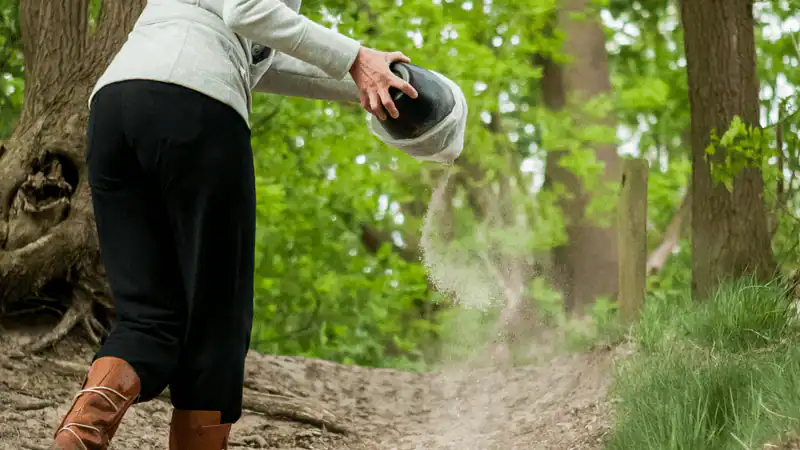
Families are permitted to scatter ashes on their own private property in New York. If the property belongs to someone else, written permission from the landowner is strongly advised. New York’s Division of Cemeteries emphasizes that scattering without the owner’s permission is illegal, regardless of whether the owner is an individual or a public agency.
Opting for a Cemetery Scattering Garden
Several cemeteries in the NYC metro area offer designated scattering gardens — peaceful, maintained spaces specifically set aside for the dispersal of cremated remains. This is an ideal option for families who want a permanent, named location tied to their loved one’s memory. Contact individual cemeteries for current availability and fees.
National Parks Near NYC
Federal land, such as Gateway National Recreation Area (which includes Jamaica Bay, Sandy Hook, and Staten Island’s Miller Field), falls under the National Park Service’s jurisdiction. A Special Use Permit is typically required before scattering. Contact the relevant ranger station well in advance of your planned ceremony.
| Important: Where You Cannot Scatter Ashes in NYC |
| New York STATE Parks — scattering is explicitly prohibited under NYS OPRHP regulations. |
| NYC drinking water reservoirs, protected watershed land, or any NYC DEP-controlled water supply. |
| Public beaches (NYC and NYS Park beaches are governed separately — verify before planning). |
| Private property without the written permission of the landowner. |
| Liberty Island or Ellis Island maintained landscapes (National Park Service restriction). |
| Directly into bodies of water within NYC Parks (ponds, lakes, streams). |
| Ocean/coastal waters within three nautical miles of the shoreline (federal law). |
| Playgrounds, athletic fields, hard surfaces, or heavily populated park areas. |
Step-by-Step: Planning an Ash Scattering Ceremony in NYC
Planning a scattering ceremony thoughtfully ensures both a legally compliant and emotionally meaningful experience. Here is a practical roadmap for NYC families.
Step 1: Choose Your Location
Consider what your loved one meant to you and the places that held significance in their life. Review the permitted locations in this guide, and shortlist two or three options. For NYC Parks locations, no advance permit is required for groups of 20 or fewer — though calling the park’s management office to give notice is always courteous and appreciated.
Step 2: Confirm the Ashes Are Processed Correctly
For park scattering, NYC Parks explicitly requires that remains be finely processed to allow complete dispersal. When you receive ashes from a funeral director or crematory, ask whether they have been fully pulverized. If not, many funeral homes can arrange additional processing. The final material is typically a fine, grayish-white granular powder.
Step 3: Choose the Right Time
Early mornings and weekday visits to NYC parks offer the most privacy. The city’s parks can be busy on weekends, particularly in Central Park. If you are planning a ceremony for 20 or more people, apply for a Special Event Permit through the NYC Parks website well in advance — at least 21 days before your planned date is recommended.
Step 4: Select Your Scattering Method

There are several ways to scatter ashes, each suited to different settings:
- Hand scattering: Pouring or releasing the ashes from the container directly. Best in enclosed, sheltered areas. Always check wind direction first.
- Scatter tube or biodegradable urn: A dedicated container with a hinged or removable lid designed for easy release. Widely available from funeral suppliers.
- Raking: Pouring ashes onto natural soil and gently incorporating them with a small rake or tool. Respectful and discreet.
- Trenching: Digging a small, shallow trench, placing the ashes inside, and covering with soil. A very private option suitable for wooded areas.
- Biodegradable water urn: For ocean or river scattering from a vessel, these urns float briefly before dissolving. Do not use on NYC park ponds or lakes.
Step 5: Plan a Short Scattering Ceremony or Tribute
A scattering ceremony does not need to be elaborate to be meaningful. Many families read a poem or passage, share a memory, or simply stand together in silence. Bringing a small biodegradable flower — which you take with you afterward — can add a beautiful visual element without violating the no-markers rule in NYC Parks.
Step 6: Comply with Post-Ceremony Requirements
For ocean scatterings, notify EPA Region 2 in writing within 30 days. Keep a note of the date, location (GPS coordinates if possible), and the names of those present. For your own records, some families also keep a small portion of the ashes in a keepsake urn or memorial jewelry.
Ocean & Harbor Ash Scattering: A Closer Look
Given New York City’s deep connection to the sea and its iconic harbor, an ocean ash scattering is one of the most popular choices for NYC families. Here is everything you need to know.
Choosing a Charter Service
Several licensed charter companies operate from Manhattan, Brooklyn, and Long Island specifically to facilitate ash scattering ceremonies. A reputable provider should be able to confirm that they sail to the federally required three nautical miles, carry appropriate liability coverage, and can supply or accept biodegradable urns. Look for companies that also provide a GPS certificate confirming the scattering location and date, which can serve as a meaningful family keepsake.
Attended vs. Unattended Scattering
Attended scatterings allow the family to be present on board — a deeply moving experience, especially as the vessel passes the Statue of Liberty against the Manhattan skyline. Unattended scatterings can be arranged through reputable providers who will carry out the ceremony respectfully and provide photographic or video documentation.
EPA Reporting
Within 30 days of the scattering, report the burial to EPA Region 2 in writing. Include the name of the deceased, the date of the scattering, the geographic location (latitude/longitude if available), and the number of mourners present. Contact details for EPA Region 2, New York: Patricia Pechko, Burial at Sea Coordinator, 290 Broadway, New York, NY 10007, (212) 637-3796.

Frequently Asked Questions
Do I need a permit to scatter ashes in NYC?
Not in most cases. NYC Parks does not require a permit for groups of 20 or fewer, provided you follow their guidelines. Groups of 20 or more require a Special Event Permit. Ocean scatterings do not require a prior permit but require EPA notification within 30 days afterward.
Can I scatter ashes in Central Park?
Yes. Central Park is managed by NYC Parks and is included in their ash scattering policy. Choose a natural, quieter area away from playgrounds, athletic facilities, and main pathways. Ashes must be finely dispersed, and no markers or mementos may be left behind.
Can I scatter ashes in the Hudson River?
Scattering directly into the Hudson River from a dock or riverbank is more complex — DEC guidance applies to inland waterways, and the protected water supply rules make some areas off-limits. The most straightforward route for a river or harbor scattering is to book a licensed charter that takes you to open ocean water at least three nautical miles from shore.
Can I scatter ashes in a New York State Park?
No. NY State Parks explicitly prohibit the scattering of ashes under NYS OPRHP Regulations. Do not confuse NY State Parks with NYC Parks — they are entirely separate systems with different rules. Always check which authority manages a specific park before making plans.
Is it legal to scatter ashes from a bridge or building in NYC?
Scattering from a bridge or elevated structure presents both legal and practical complications. Federal aviation regulations prohibit dropping anything from an aircraft that could harm people or property. Similar principles apply to bridges and public structures. There is no legal framework specifically permitting this in NYC, and it is generally best avoided.
Can I scatter my pet’s ashes in the same ceremony?
For ocean scatterings under the EPA’s MPRSA general permit, pet ashes cannot be mixed with human cremated remains. They must be treated as separate items. For land scatterings in NYC Parks, check with the park authority in advance, as their policies primarily address human remains.
What should I do if I want a private, intimate ceremony?
Early weekday mornings offer the best privacy at NYC parks. In Central Park, the North Woods, The Ramble, and the Hallett Nature Sanctuary area tend to be quieter. For an especially private ceremony, booking a private charter for an ocean scattering gives you a dedicated vessel and crew for your family alone.
Do I need to bring the ashes in a special container?
No legal requirement dictates the container for transport. However, for park scattering, using a scatter tube or biodegradable urn makes the process smoother. For ocean scattering, the container must be biodegradable — no plastic may enter the water.

Planning Checklist: Scattering Ashes in NYC
| Task | Details |
| Confirm cremains are finely processed | Ask your funeral home or crematory to verify. Request additional pulverization if needed. |
| Choose your location | NYC Park, ocean charter, private property, or cemetery scattering garden. |
| Check group size | Groups of 20+ in NYC Parks require a Special Event Permit. |
| Apply for Special Event Permit (if needed) | Apply via the NYC Parks website. Allow at least 21 days. |
| Book a charter (if ocean scattering) | Confirm they sail to 3+ nautical miles and provide EPA-compliant services. |
| Arrange a biodegradable urn or scatter tube | Especially important for ocean scattering (no plastic). |
| Plan your ceremony | Assign someone to check the wind direction |
| Assign someone to check wind direction | Scatter downwind to avoid accidental distress. |
| Notify EPA Region 2 within 30 days (ocean only) | In writing. Include name, date, location, and number of mourners. |
| Keep a personal record | Date, location, who was present. Consider a small keepsake portion. |
Supporting Yourself and Your Family Through the Process
Planning a scattering ceremony while grieving is not easy. It is entirely normal to feel overwhelmed by both the logistical and emotional weight of the process. A few thoughts that many families find helpful:
- You do not have to do everything at once. There is no legal deadline for scattering ashes in New York State. Take the time you need to feel ready.
- It is okay for the ceremony to be small and simple. A brief, quiet moment in a meaningful place can be just as powerful as a large gathering.
- Many funeral homes and grief counselors in NYC can help with both the practical arrangements and the emotional journey. You do not have to navigate this alone.
- If family members are spread across the country or world, consider an unattended ocean scattering with video documentation, allowing everyone to watch and participate remotely.
- Some families choose to hold a separate memorial service at a different time or location from the scattering itself, allowing space for both formal remembrance and private farewell.
Direct Cremations in Manhattan
Direct Cremations in Staten Island
Direct Cremations in The Bronx
Important Notice
This guide is provided for general informational purposes only and does not constitute legal advice. Regulations change, and local authorities retain discretion in their application of rules. Always verify current requirements directly with the NYC Parks Department, NY State Parks, the EPA, or any other relevant authority before proceeding with a scattering ceremony. When in doubt, consult a licensed funeral director in New York State.
Nicholas Ille is the co-founder, author, and network director of DFS Memorials. Since launching the network in 2012 with Sara Marsden-Ille, Nicholas has built and managed the 80+ funeral home and cremation provider partnerships that make up the DFS Memorials referral network across the United States and Canada. He oversees provider vetting, network standards, and ongoing relationships with local funeral professionals. He established US Funerals Online & Canadian Funerals in 2003 and continues to research and publish industry information across all 3 websites.