
Losing someone you love is hard enough. The last thing you need is to be stopped at airport security while carrying their remains. The good news: you can fly with cremation ashes, both domestically and internationally. But there are rules you need to know before you get to the checkpoint.
This guide covers everything — TSA regulations, which urns pass X-ray, what paperwork to carry, and how to travel internationally with ashes — so you can focus on honoring your loved one instead of worrying about logistics.
Can You Take Cremation Ashes on a Plane?
Yes. The TSA explicitly permits cremated remains in both carry-on bags and checked luggage. Most funeral professionals and grief counselors recommend carry-on only, for one simple reason: luggage gets lost. You don’t want to risk checked bags being misrouted when they contain your loved one’s remains.
Airline policies generally mirror TSA rules, but always check with your specific carrier before flying, especially on international routes.
TSA Rules for Flying With Cremation Ashes
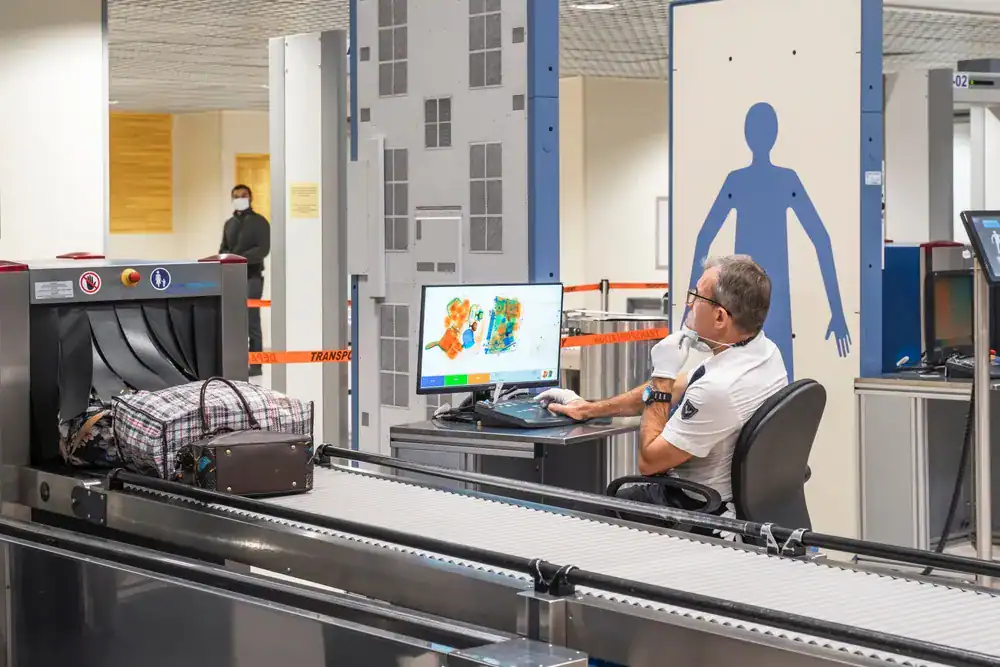
The TSA’s primary requirement is straightforward: the urn must be X-ray scannable. Security officers cannot open an urn to inspect its contents — that’s a firm policy, out of respect for the deceased. If the container cannot be screened through the X-ray machine, it will not be allowed through the checkpoint, no matter what documentation you have.
Key TSA rules at a glance:
- The urn or container must pass X-ray screening
- TSA officers will not open the container under any circumstances
- If the container blocks X-ray imaging, it will be denied at the checkpoint
- Cremated remains are allowed in carry-on and checked bags
- There is no TSA limit on the quantity of ashes
This means the material your urn is made from matters enormously.
Which Urns Are Allowed Through TSA Security?

The urn’s material determines whether it will pass X-ray. Here’s a quick breakdown:
TSA-Approved Urn Materials (X-ray transparent):
- Plastic — Passes X-ray easily; least aesthetically traditional but very practical for travel
- Wood — Generally passes X-ray screening
- Biodegradable materials — Paper, bamboo, and similar materials pass screening well
- Ceramic (lighter varieties) — Often passes, but test with your funeral home if unsure
Materials That May Be Denied:
- Marble — Dense stone blocks X-ray imaging in most cases
- Thick ceramic — Heavy ceramic can be opaque to X-ray
- Metal urns — Lead, cast iron, and thick metal urns will almost always be rejected. Stainless steel urns may sometimes pass, but it depends on wall thickness and the specific X-ray equipment used.
Check out the DFS Complete Guide to Urns to find an affordable container for traveling with. Simple, biodegradable cardboard tubes can be purchased online for $29.99.
The safest approach: Ask your funeral home for a temporary plastic travel urn or purchase a TSA-friendly travel urn specifically designed for air travel. Many families transfer ashes into a temporary container for the flight, then place them back in the permanent urn at the destination.
What Documents Should You Bring?

The TSA does not legally require documentation to transport cremated remains, but having the right paperwork makes the process smoother — especially if a security officer has questions or if you’re traveling internationally.
Recommended documents to carry:
- Death Certificate — A certified copy (not a photocopy) of the official death certificate
- Cremation Certificate — Also called a cremation authorization or permit; issued by the crematorium
- Funeral Home Letter — A letter on funeral home letterhead identifying the contents of the container
- Passport of the Deceased (optional) — Some families carry this for international travel
Keep all documents easily accessible in your carry-on — not buried at the bottom of your bag. If a TSA officer asks about the container, calmly identify it and offer your documentation.
How to Pack Cremation Ashes for Air Travel
Step-by-step packing guide:
- Choose a TSA-approved container. If your permanent urn is stone or metal, transfer the ashes to a travel urn or heavy-duty plastic bag inside a secondary container.
- Seal the urn securely. Make sure there’s no risk of the container opening during handling. Use tape around the lid if necessary.
- Place in a protective bag or box. A soft-sided pouch or padded case protects the container from bumps.
- Pack in your carry-on. Place the urn in your bag so it can be easily removed for screening if asked.
- Carry your documents separately. Keep the death certificate and cremation permit in your personal item or jacket pocket.
- Alert the TSA officer. When you reach the checkpoint, let the officer know you are carrying cremated remains before the bag goes through the X-ray belt. This is not required, but it helps the process go smoothly and ensures respectful handling.
Flying With Cremation Ashes Internationally

International travel with ashes adds another layer of requirements. Each country has its own regulations, and some require specific documentation or permits to import cremated remains.
General requirements for international travel:
- Apostille-certified death certificate — Many countries require an apostilled (internationally authenticated) death certificate
- Cremation certificate — Translated into the destination country’s language in some cases
- Transit permits — Some countries require permits even if you’re just passing through (in transit)
- Customs declaration — In many countries, you must declare cremated remains at customs
Countries with known restrictions or requirements:
- Mexico — Requires a death certificate and cremation certificate; customs declaration required
- European Union — Generally permissive, but individual member states may have additional rules
- Australia — Requires a cremation certificate; biosecurity declaration at arrival
- Japan — Very specific documentation requirements; consult the Japanese consulate in advance
Always contact the embassy or consulate of your destination country at least 2–4 weeks before travel to confirm current requirements. Rules change and vary by country.
Can You Ship Cremation Ashes Instead?

If flying feels like too much, or if you need to transport ashes to a distant location without traveling yourself, USPS is the only U.S. carrier legally permitted to ship cremated remains domestically. They must be shipped via Priority Mail Express and in the manner specified by their guidelines.
FedEx, UPS, and DHL do not accept cremated remains for domestic U.S. shipment, though some international shipping via these carriers may be possible depending on the destination country.
Frequently Asked Questions About Transporting Cremated Remains
Can TSA open my urn?
No. TSA policy strictly prohibits opening urns or containers of cremated remains. If the container cannot be screened, it will not be permitted through — but it will never be opened.
Do cremation ashes count as a liquid?
No. Cremated remains (cremains) are a dry, granular material and are not subject to the TSA’s 3-1-1 liquid rules.
Can I carry someone else’s ashes?
Yes, there is no TSA requirement that you be a family member to transport cremated remains. However, carrying documentation that identifies the deceased and confirms cremation is strongly recommended.
What happens if my urn fails X-ray?
The urn will not be allowed through the checkpoint. You will need to check it or return it to your car/hotel. This is why traveling with a TSA-approved container is so important — plan ahead to avoid this situation.
Can I bring ashes on a cruise ship?
Yes, in most cases. Cruise lines generally follow similar guidelines to airlines, but policies vary by cruise line. Contact your carrier directly, especially if you plan to scatter ashes at sea, which requires additional permits.
Final Thoughts
Traveling with a loved one’s cremated remains is a deeply personal experience, and navigating airport security doesn’t have to make it harder. The key steps are simple: use a TSA-approved container, carry your documentation, alert the officer at the checkpoint, and keep everything in your carry-on.
Read more about Transporting Cremated Remains
Nicholas V. Ille is the founder of DFS Memorials, a nationwide network connecting families with trusted, local cremation providers. With more than 25 years of experience in the death care industry, he writes about cremation, funeral planning, direct cremation trends, and consumer-focused end-of-life care. Nicholas is also the founder of US Funerals Online and Canadian Funerals Online.
