
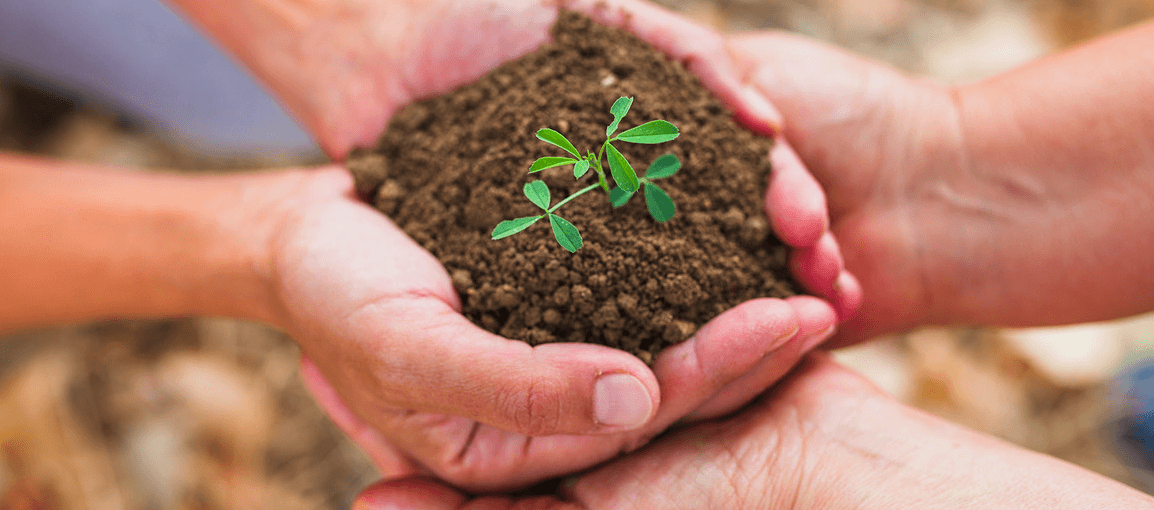
For much of human history, death was a natural return of the body to the earth. The body, when life expired, was once laid to rest in a simple grave. It would eventually break down and become part of the very soil from which we came.
This process — slow, sacred, and elemental — is at the heart of the phrase, “ashes to ashes, dust to dust.” The phrase originates from the Book of Common Prayer, in the burial service of the 1662 Anglican Church edition.
The term is drawn from bible passages [Genesis 3:19 and Ecclesiastes 3:20] which focus on human mortality, the core dichotomy of life and death, and the body returning to the earth…to dust.

“Forasmuch as it hath pleased Almighty God of his great mercy to take unto himself the soul of our dear brother here departed, we therefore commit his body to the ground; earth to earth, ashes to ashes, dust to dust…”
Book of Common Prayer’s burial rite.
The meaning of the phrase is intended in part to reflect the natural cycle of creation and decay, echoing the biblical notion that humans are created from the earth and return to it.
Yet in modern Western culture, the journey back to the earth has been interrupted by industrial practices that delay, or even deny, nature’s process.
Where a natural burial should enable the body to decompose organically and return to the earth within a few years (depending on the topography of a burial site), a ‘modern’ chemical/casket/vault preservation burial can preserve a body for several decades.

What was once an organic, natural burial largely handled by family, community, and faith leaders – became a multi-billion dollar industry shrouded in mystery, money, and taboo.
Today, we are reexamining what it truly means to return to the earth after death. From cremation to embalming, steel caskets to green burials, the choices we make for our final disposition have wide-ranging implications — for both our environment and our understanding of mortality.
The Rise of a Modern Burial: How the Funeral Tradition Was Redefined & Industrialized

Many people associate a “traditional funeral” with a very specific series of events: embalming the body, placing it in a sealed steel or hardwood casket, then lowering it into the ground inside a concrete vault or burial liner.
Ironically, this version of burial is anything but traditional in a historical or global sense.
The embalming process, which involves replacing blood with chemical preservatives (primarily formaldehyde-based fluids), was popularized in the U.S. during the Civil War as a means of preserving soldiers’ remains for transport home.
Over time, the funeral industry standardized embalming as a routine part of burial, marketing it as a way to preserve dignity, delay decomposition…..and charge a substantial fee for this unnecessary intrusive procedure.

Meanwhile, the introduction of steel caskets and concrete burial vaults — originally designed to prevent a grave settling, ensure stability of a headstone, and deter grave robbers — became common in the 20th century.
These heavy-duty materials do not accelerate decomposition; they often do the opposite, sealing the body off from soil, moisture, and microbes, effectively delaying the natural return to the earth by decades or longer.
For close to two centuries now, managing death has been in the domain of the funeral trade, creating an industry that is worth close to $25 billion today in North America, and projected to grow to $38 billion by 2031.
How Long Does it Take for a Human Body to Return to Dust?

The decomposition of a human body depends heavily on environmental conditions and the materials surrounding it.
Let’s look at the 3 main options for burial and the average time-scales for the body to ‘naturally’ decompose and return to the elements of earth.
- Embalmed body in a steel casket and concrete vault:
In this case, decomposition can take 50 years or more, and full skeletonization may take even longer. Embalming chemicals slow down microbial activity, while metal and concrete create a dry, anaerobic environment that further delays natural processes. - Un-embalmed body in a wooden casket:
Without embalming and with organic materials, the body can decompose naturally within 10 to 15 years, returning more efficiently to the earth. - Natural or green burial:
In a shroud or biodegradable container, placed directly into the soil without a vault, the body can decompose and integrate with the surrounding earth within 1 to 5 years, depending on climate and soil.
Cremation: An Accelerated Return to Ashes?

Cremation has grown in popularity across much of the Western world, now accounting for more than 60% of deaths in the United States.
The appeal is often practical: it’s typically cheaper, requires no cemetery plot, and avoids embalming.
Due to the shift towards cremation services, even the Church realized it had to acknowledge and acquiesce to cremation as an ‘accepted’ funeral practice.
In the cremation process, the body is exposed to extreme heat (1,400–1,800°F) in a crematory furnace for 2–3 hours. What remains is not ash in the traditional sense, but bone fragments that are pulverized into a fine powder — what we commonly call “ashes.”
This method quickly reduces the body to remains that can be scattered, buried, or kept. However, it does not “return the body to the earth” in the same biological sense.

Cremation also carries an environmental cost: each cremation releases approximately 400–500 pounds of carbon dioxide, along with trace amounts of mercury and other pollutants, into the atmosphere.
So, although cremation can be viewed as a ‘faster’ means of disposition in terms of reducing a body to base elements, and producing what we think of as “ashes” – it is still something of a ‘mechanical and industrial’ process.
It has a significant impact on emissions and uses considerable energy and resources. Requiring the employment of ‘professional’ funeral personnel and crematory operators, even if no funeral service is conducted and a direct cremation is performed.
Is Green the New Black? The Return of Natural Burial & Organic Death Care

As awareness grows about the environmental impact of modern funerals, many individuals and families are returning to natural burial — the most direct and least invasive way to give the body back to the earth.
A natural burial avoids embalming, metal caskets, and vaults. Instead, the body is buried in a simple biodegradable shroud or container, often in a dedicated green cemetery.
These burials are not only more eco-friendly but often more emotionally resonant — honoring death as a natural phase of life, rather than something to sanitize or delay.
Natural burial is also spiritually aligned with many belief systems that emphasize simplicity, humility, and the cyclical nature of existence.

In the most recent National Funeral Directors Association [NFDA] survey, 60.5% of respondents stated an interest in green burial. However, as this article is published, only 5% of burials today are considered natural burials.
This demonstrates a disparity between what consumers can state they want for end-of-life choices and what is made easily available or ‘common practice’ in funeral decisions.
The number of funeral homes openly offering green funeral services is still rather limited, and for many funeral consumers, the choice seems to lie between a traditional burial or a cremation service.
Cost-wise – green funeral services seem to sit in a ‘no man’s land’ vaguely positioned between the lower cost of cremation and the high price of a traditional funeral.
If natural, sustainable burial were given a PR make-over, and offered by more funeral practitioners at a cost that reflected its simplicity and holistic value – then potentially it would become more mainstream.
The Rise of Organic and Sustainable Burial and Cremation Alternatives

In the last six or so years, we have witnessed a small and growing movement leaning towards alternative ‘greener’ death care alternatives. The number of cemeteries offering natural or green burial has increased.
This increase comes about as progressive, sustainable death care advocates invest in new conservation and natural burial sites.
But, also, many existing traditional cemeteries realize that they need to designate a section for natural burials. Especially as traditional burial is in radical decline, and with cremation at over 60%, these cemeteries are losing their income stream.
Directory of Green Burial Cemeteries in the United States.

Human Composting [Natural Organic Reduction] and Aquamation [water cremation] – as alternatives to natural burial in a cemetery, or flame cremation, have emerged in a limited number of states.
Both offer more sustainable options than traditional burial practices without embalming, steel, and concrete, and lowering carbon footprints. However, both NOR and aquamation are again industrial practices requiring specific machinery to conduct a disposition process.
Natural burial in a Green Burial Council (GBC) certified cemetery is still the most organic, simple, least commercialized, and relatively inexpensive manner by which to reduce the body to ashes.
Read more at The New Era in Eco-Friendly Funerals.
Reimagining Our Final Footprint

At its core, the way we treat our dead reflects our values. For much of recent history, the funeral industry has encouraged a culture of preservation, display, and permanence — sometimes at the expense of ecological harmony.
Today, we are witnessing a quiet shift: toward simplicity, sustainability, and reconnection with the earth.
Whether through flame or soil, the body will eventually return to dust. The choice we face is not whether that happens, but how — and how meaningfully we want our final act on earth to be.
Biblical Sources
- Genesis 3:19 (KJV):
“In the sweat of thy face shalt thou eat bread, till thou return unto the ground; for out of it wast thou taken: for dust thou art, and unto dust shalt thou return.”
This verse is part of God’s pronouncement to Adam after the Fall, highlighting that humans, created from the earth (dust), will return to it upon death. - Ecclesiastes 3:20 (KJV):
“All go unto one place; all are of the dust, and all turn to dust again.”
This reinforces the idea that all living things, human and animal, share a common origin and fate in returning to the earth.
Sara Marsden-Ille is a writer and researcher specialising in the death care industry. With more than 15 years covering end-of-life services, funeral trends, and consumer funeral planning, she writes for DFS Memorials and US Funerals Online to help families make informed decisions.


